Prime Minister's Office

The Prime Minister's Office carries out official duties of the Prime Minister of the Democratic Socialist Republic of Sri Lanka and provides necessary guidance, coordination facilities and leadership to achieve economic and social development goals in accordance with the government policies.

Moreover, the Prime Minister’s Office provides necessary leadership and guidance to fulfill the aspirations of people while standing by the side of them in the hour of need with great enthusiasm and commitment. It provides regular assistance in policy making and also necessary contribution, guidance and coordination through a people centered approach to achieve Sustainable Development Goals (SDG). It plays a crucial role in maintaining diplomatic relationships and international relations, through facilitating negotiations, conducting high level diplomacy with foreign leaders, countries, states and representatives and coordinating the efforts of various government agencies and departments involved in foreign affairs.

Vision

“An independent, sovereign and prosperous Sri Lanka”

Mission

“To provide the necessary leadership for an excellent government mechanism with good governance, maintaining an effective coordination between States, Foreign missions, United Nations and Non-Governmental institutions in order to realize the aspirations of the Sri Lankans and improve their quality of life”

A structured mechanism with public participation is essential for collecting accurate data collection - Prime Minister Dr. Harini Amarasuriya

Prime Minister Dr. Harini Amarasuriya stated that accurate data is essential for the post-disaster recovery process of the country, and that a structured mechanism with public participation is needed for efficient data collection.

The Prime Minister made these remarks during a discussion held on the 10th of December at the Prime Minister’s Office regarding the country’s recovery process following the recent disaster situation.

During the meeting, Professor Nihal Perera demonstrated how national development should take place in harmony with nature while minimizing natural disasters.

Addressing the meeting, Prime Minister Dr. Harini Amarasuriya further stated:

One of the main challenges we face when moving towards a new development framework is the limited access to a proper system to consolidate data from various sectors into a single platform.

Establishing a data-collection mechanism that includes both state officials at ground level and community participation is extremely important. It is the people at the village level who best understand the accurate ground realities. Therefore, setting up a proper data-collecting mechanism at divisional and district levels is vital.

Expressing views, Deputy Minister of Mass Media Kaushalya Ariyarathna stated:

The recent disaster situation gave us a clear understanding of how practical and effective the actions led through community participation. During the recent floods, we successfully carried out relief activities in Kaduwela with the active participation of the local community. In that case, the division committee model became extremely useful. If a similar community-based structure such as Praja Shakthi committees or division councils can be used for data collection, it would be highly beneficial.

Secretary to the Prime Minister Pradeep Saputantri noted that one of the key issues related to data is the lack of proper coordination among state institutions. Poor institutional collaboration and officials limiting their responsibilities strictly within their designated boundaries have led to this situation. Therefore, establishing an integrated data-collection mechanism covering all Grama Niladhari divisions is extremely important.

The discussion also highlighted the importance of data-driven decision-making and the need to raise awareness among both officials and the public at the regional level regarding this matter.

The event was attended by the Additional Secretaries to the Prime Minister and several other officials.

Prime Minister’s Media Division
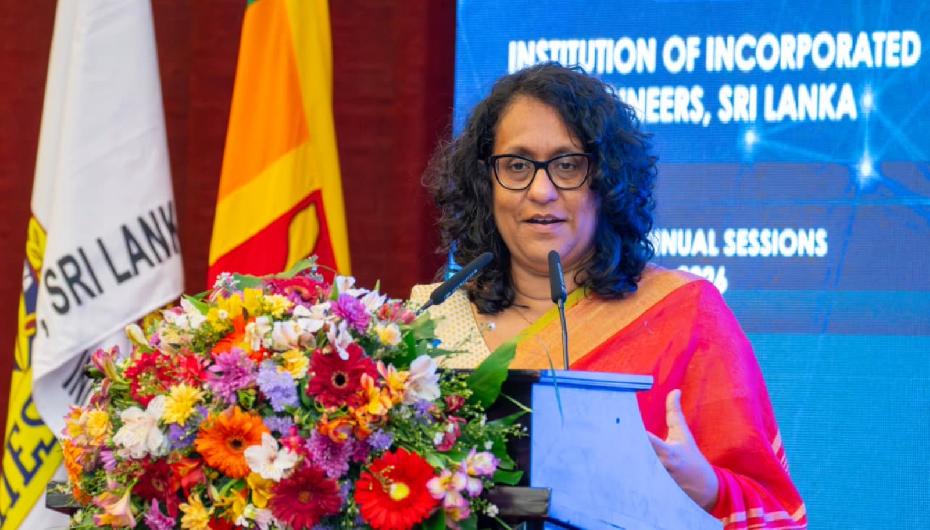
A series of Inter religious programs held island wide to pray for the Sri Lankans who affected by the Ditwah cyclone and floods

A series of inter-religious programs launched across the island under the directions of the Ministry of Buddha Sasana, Religious, and Cultural Affairs to offer blessings for the people affected by the Ditwah Cyclone and floods and to confer prayers for all those who lost their lives during the disaster.

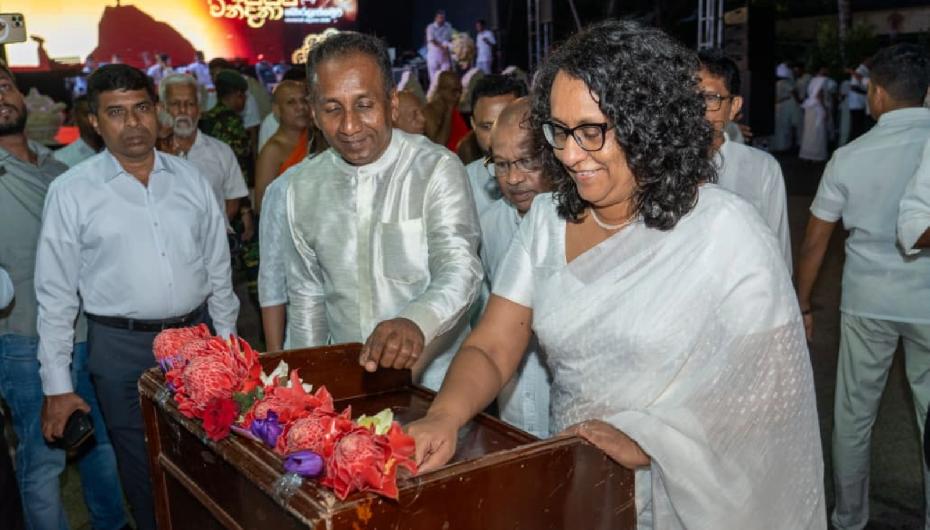
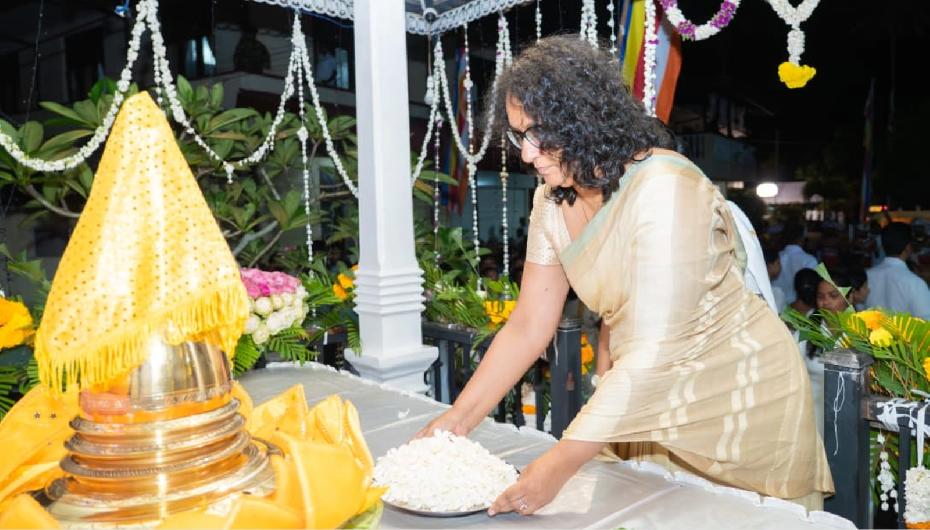
Accordingly, under the supervision of the Chief Prelate of Hunupitiya Gangarama temple, Ven. Dr. Kirinde Assaji Nayaka Thero, a Sarwa Rathika Pirith chanting ceremony was held at the Seema Malaka of Hunupitiya Gangarama Temple in Colombo. Following the offering of gilanpasa and flowers for the sacred relic by the Prime Minister Dr. Harini Amarasuriya and Minister of Buddha Sasana, Religious, and Cultural Affairs, Dr. Hiniduwa Sunil, the Maha Sangha commenced the Pirith chanting ceremony.

During the occasion, an amount of LKR 128 million was contributed to the government to restore religious sites across the island that were damaged by the emergency disaster situation.

The ceremony was attended by the Anunayaka of the Malwathu Chapter, Most Venerable Dimbulkumbure Sri Saranankara Thero; and the members of the Maha Sangha, Secretary to the President Dr. Nandika Sanath Kumanayake, Secretary to the Prime Minister Mr. Pradeep Saputhanthri, officials and a larger number of devotees.

Prime Minister’s Media Division
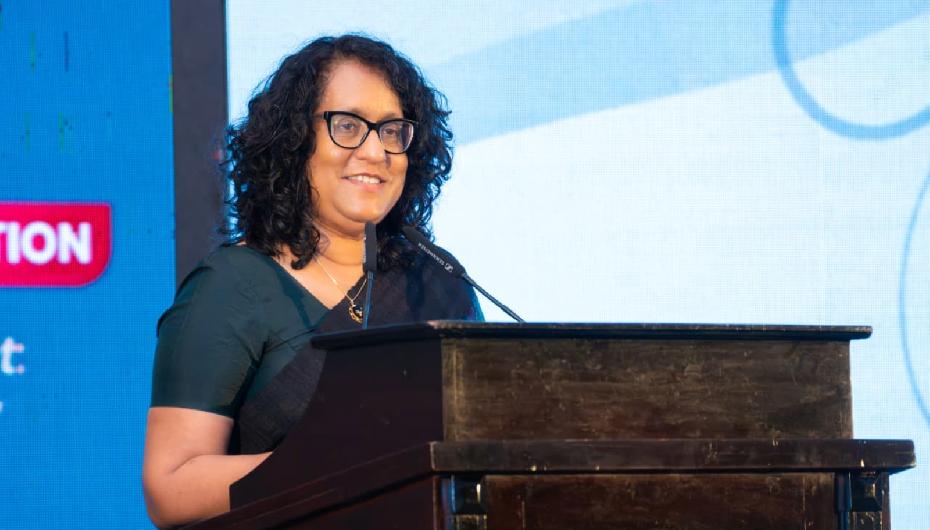
There will be no permission granted for unauthorized constructions in the Colombo District. — Prime Minister Dr. Harini Amarasuriya

We cannot allow flooding to become a part of the daily lives of the people in the Colombo District.

Prime Minister Dr. Harini Amarasuriya stated that there will be no permission granted for unauthorized constructions within the Colombo District, nor any form of residential developments that endanger the public by carrying out under the guise of development agenda.

The Prime Minister made these remarks while addressing the media at the conclusion of the Colombo District Disaster Management Committee meeting held on December 09 at the Colombo District Secretariat.

Addressing further, Prime Minister Dr. Harini Amarasuriya stated:

The Colombo District has become vulnerable to this extent due to the constructions carried out without any proper planning or understanding of regulations, along with personal and politically motivated decisions that have placed both the district and its people at risk.

Compared to the districts that suffered severe loss of life and property due to the recent cyclone, the damage to the Colombo District has been relatively lower. However, special intervention is being carried out together with the relevant institutions to manage the potential future flood risks in the district.

This matter was also given special attention during today’s District Disaster Management Committee meeting. We cannot allow the annual flooding to become a regular part of the lives of the people in Colombo. All relevant institutions will come together to put forward a common plan for flood control in the district, and the necessary steps are being prepared to implement it accordingly.

The Prime Minister further stated that discussions are already underway to provide sustainable solutions for the people living in high-risk areas within the Colombo District.

The discussion was attended by the Deputy Minister of Urban Development Eranga Gunasekara, Deputy Minister of Mass Media Kaushalya Ariyaratne, and Colombo District Members of Parliament Aruna Panagoda and Chandana Suriyarachchi.

Prime Minister’s Media Division

Timely and accurate data essential for effective decision making - Prime Minister Dr. Harini Amarasuriya

A meeting was held to discuss post-disaster planning and the reconstruction process, with special focus on flood-prone areas on 8 th of December at the Prime Minister’s Office. The discussion was held under the patronage of the Prime Minister, and attended by representatives from the United Nations Development Programme (UNDP), the World Bank, and the United Nations Office for Project Services (UNOPS).

During the meeting, the Prime Minister emphasised the critical importance of timely and systematic information and data collection to support timely and effective decision-making on a daily basis following the post disaster situations. The Prime noted that accurate data flows are essential for guiding recovery efforts in the short and long term.

The Representatives outlined the need assessment process using RAPIDA and Global Rapid Post-Disaster Damage Estimation (GRADE), the UNDP’s post-crisis assessment initiated by integrating GIS technology, satellite imagery, and ground-level data, to deliver real-time, actionable insights after a crisis to helps identify affected locations, communities, infrastructure damage, debris estimates, and land use changes-providing crucial data.

The representatives of UNDP reaffirmed their commitment to supporting the Government and they expressed their readiness to collaborate closely and to strengthen ongoing partnerships to enhance the efficiency and effectiveness of post-disaster response and reconstruction activities.

The discussion was attended by the Country Manager for World Bank Dr. Gevorg Sargsyan, Resident Representatives for United Nations Development Programme (UNDP) Ms. Azusa Kubota, South Asia Director for United Nations Office for Project Services ((UNOPS), and Secretary to the Prime Minister Mr. Pradeep Saputhanthri, Additional Secretary (Development) Ms Sagarika Bogahawaththa and officials from the Department of National Planning.

Prime minister’s media division

Bandaranaike Memorial National Foundation donates Rs. 250 million to the Government for national recovery after the emergency situation

The Bandaranaike Memorial National Foundation has donated Rs. 250 million to the Government to support the rebuild of the country following the emergency situation caused by the Ditva cyclone.

Accordingly, Chairperson of the Bandaranaike Memorial National Foundation, former President Chandrika Bandaranaike, together with the Board of Directors, handed over the cheque to Prime Minister Dr. Harini Amarasuriya on 08 th of December at the Prime Minister’s Office.

Subsequently, a cordial discussion was held between the Foundation’s Chairperson, former President Chandrika Bandaranaike, and Prime Minister Dr. Harini Amarasuriya.

The occasion was attended by the secretary to the Prime Minister Pradeep Saputhanthri, Minister of Buddhasasana, Religious and Cultural Affairs Dr. Hiniduma Sunil Senevi, and representatives of the Board of Directors of the Bandaranaike Memorial National Foundation.

Prime Minister’s Media Division

Government Assures University Community of Support to Rebuild Peradeniya Stronger and Safer. - Prime Minister Dr. Harini Amarasuriya

Prime Minister Dr. Harini Amarasuriya stated that the Government stands ready to support the University of Peradeniya in rebuilding stronger, safer, and more resilient than before. She made these remarks while visiting the University of Peradeniya today (07), where she met with student representatives and Heads of Departments affected by the sudden floods that swept through the campus on 27 November.

The visit aimed to personally inspect the damage, which caused extensive harm to academic buildings, student facilities, and key infrastructure. University officials briefed the Prime Minister on the severity of the impact, highlighting significant losses to the Faculties of Management, Agriculture, and Veterinary Medicine, as well as the IT Centre, CDCE, gymnasium, swimming pool, and playgrounds.

The Prime Minister was also briefed on how the disaster disrupted both academic activities and the wellbeing of students and staff, including the loss of more than 110 computers, vital laboratory equipment, examination documents, and four central IT servers, with preliminary damage estimates exceeding Rs. 6 billion. She commended the swift evacuation of nearly 750 students from hostels located along the Mahaweli River and acknowledged the resilience shown by nearly 11,000 students who remained on campus during the crisis.

She expressed her appreciation to the Sri Lanka Army, the Disaster Management Centre, and local donors for providing food, water, and essential supplies at a time when access and communication were severely disrupted.

A joint engineering team has confirmed that university buildings remain structurally stable, although several require urgent repairs. With academic activities suspended until 15 December.

The Prime Minister discussed with the Vice Chancellor and emergency response teams the immediate steps required to restore normalcy and provide necessary support to students whose studies and daily routines have been significantly affected.

During these discussions, the Prime Minister issued a series of directives focusing on both immediate relief and long-term safety. These include restoring essential services such as water, electricity, and safe access pathways for students; accelerating the rehabilitation of heavily damaged faculties and laboratories; strengthening early warning systems for flood-prone areas; and implementing long-term mitigation measures such as riverbank protection, improved drainage, and the relocation of vulnerable facilities. She also directed the relevant agencies to fast-track government assistance, assuring the university community that the Government stands ready to help Peradeniya rebuild stronger, safer, and more resilient than before.

The meeting was attended by Mr. Nalaka Kaluwewa, Secretary to the Ministry of Education, Higher Education and Vocational Education; Kandy District Parliamentarian Thanura Dissanayake, Professor Terrence Madhujith, Vice Chancellor of the University of Peradeniya; and Professor R. W. Pallegama, Deputy Vice Chancellor of the University of Peradeniya, along with Heads of Departments, officials, and student representatives of the University of Peradeniya.

Prime minister’s media division