Admissions to Grade One in 2027 to be carried out under a new circular
Government focusing on limiting social media use by children under 16
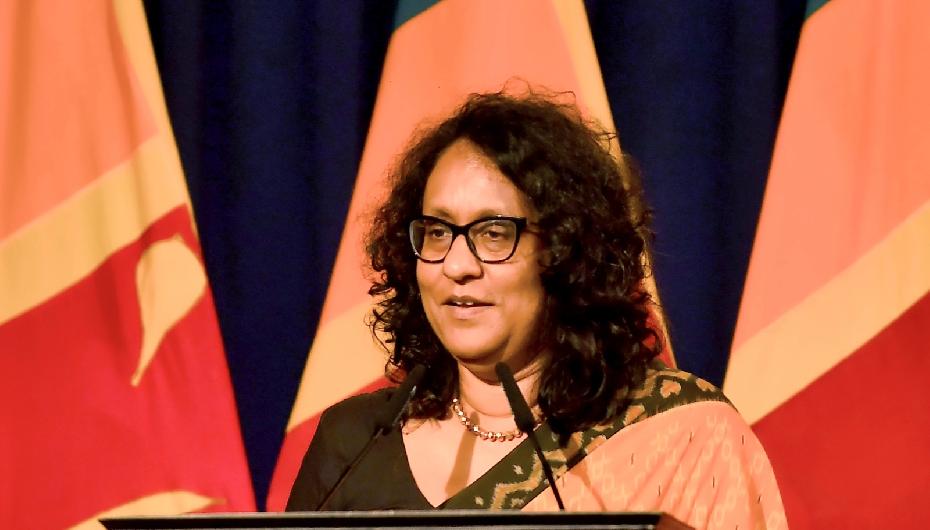
Prime Minister Dr. Harini Amarasuriya stated that the Government has drawn attention to introducing measures to prohibit or restrict social media use by children under the age of 16 in Sri Lanka, and has taken action to prepare a new national programme to prevent child abuse and the admissions to Grade One in 2027 to be carried out under a new circular.
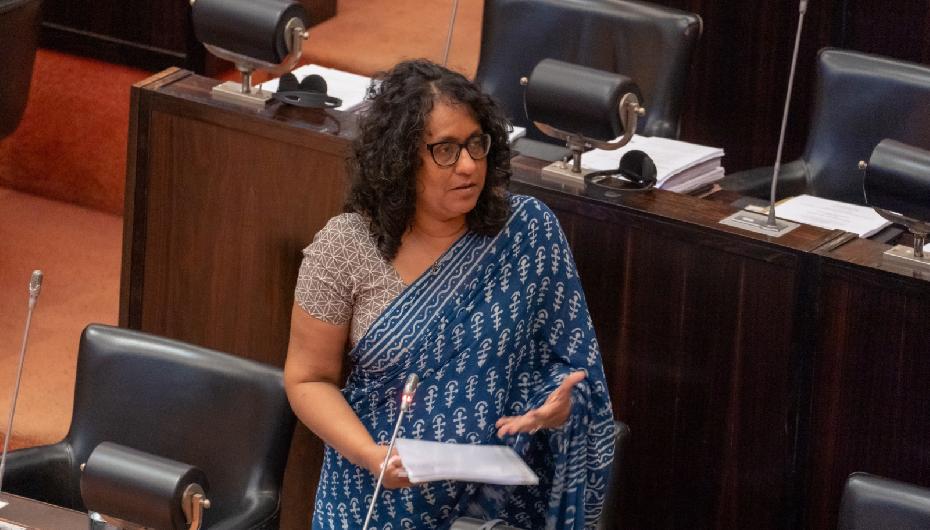
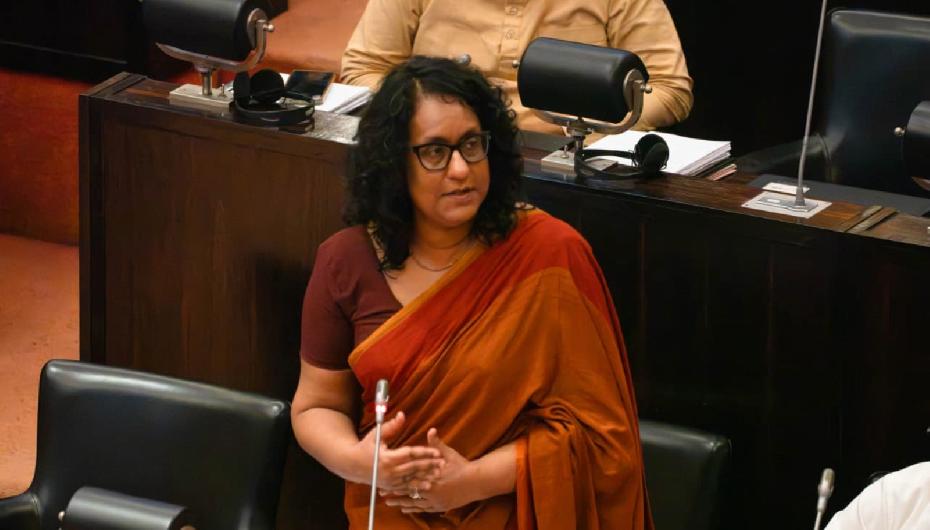
The Prime Minister made these remarks in Parliament today (08), while responding to questions raised by Members of Parliament Harshana Rajakaruna, Shanmugam Kugadasan, Ajantha Gammadda and Nilusha Lakmali Gamage.
The Prime Minister further stated:
A policy framework is currently being developed to protect children in the digital environment, taking into account the psychological, health and social impacts associated with social media use among children under the age of 16. Initial discussions are being conducted under the leadership of the Ministry of Women and Child Affairs, with the participation of the Ministries of Education, Health and Digital Economy, the Sri Lanka Police, the Sri Lanka Computer Emergency Readiness Team (SLCERT), the Information and Communication Technology Agency (ICTA), the National Child Protection Authority (NCPA), and several other institutions. As progress of this initiative, a National Guideline on Child Safety is being prepared, while a nationwide dialogue based on the concept of Brain Health is also set to be launched.
In addition, the Department of Probation and Child Care Services, in collaboration with World Vision, has formulated a project aimed at protecting children from online violence, and steps are being taken to secure financial assistance from the SAARC Development Fund. Further, with the support of UNICEF, a Digital Competency Framework for teachers has been developed, under which approximately 750 trainers have already been trained through the Online Safety module. Teacher training is currently being conducted through 106 Distance Learning Centres, while the Online Safety, Cyber Security and Digital Well-being guideline for school students is scheduled to be introduced from September 2026. A pilot programme to empower families to address children’s addiction to mobile phones is also being implemented with voluntary technical guidance provided by Professor Duminda Guruge of the University of Colombo.
Within nearly two years of assuming office, the present Government has established a multi-sectoral integrated mechanism, through Cabinet decisions and with the participation of several institutions, to strengthen child protection and safeguard children’s rights. Under this mechanism, the programme Diviyata Saviyak provides grants of Rs. 2 million each for the construction or purchase of houses for orphaned children, while the programme Artha provides a monthly allowance of Rs. 5,000 for children who have lost both parents. Additional measures include facilitating the issuance of birth certificates for children who do not possess them, implementing a pilot project titled Senehasa in Ratmalana to support children who become vulnerable after school hours, presenting legislation to prohibit corporal punishment, and implementing the National Child Protection Policy 2025–2029. Furthermore, the establishment of two video evidence recording centres at the Karapitiya and Anuradhapura Hospitals, enabling children to provide evidence without appearing in court, is now in its final stage.
In order to address issues relating to proof of residence in admissions to Grade One in government schools, a new circular incorporating a structured assessment system has been issued for implementation from the 2027 academic year. Under the new system, applicants will be eligible to receive up to four marks for proof of residence based on specific criteria, including families residing on State land for more than eight years and those able to produce electricity, water or assessment tax bills confirming permanent residence over periods ranging from one to six years. Taking into consideration complaints that certain schools admit students outside the official waiting list, the new circular requires schools to maintain a temporary waiting list limited to 50% of the available vacancies. This may be increased up to 100% only with the prior approval of the National or Provincial Director of Education under exceptional circumstances. In addition, as part of the ongoing education reforms, the maximum number of students permitted in a classroom is currently under review, and corresponding policy revisions will be introduced in due course.
Responding to a question regarding the restoration of abandoned irrigation tanks to promote paddy cultivation in the Trincomalee District, the Prime Minister stated that, according to data received for the year 2021, 15 out of 210 abandoned tanks in the district have already been rehabilitated, while the remaining 195 are scheduled for restoration. Similarly, 8 out of 25 abandoned anicuts have been rehabilitated, with the remaining 17 to be restored. The Prime Minister explained that the principal reasons for these delays have been the failure to release lands under the Departments of Forest Conservation and Wildlife Conservation to the Department of Agrarian Development, together with the lack of adequate financial allocations. The Government intends to address these issues and expedite the rehabilitation of these irrigation structures for agricultural purposes.
The relevant Divisional Secretariats are currently facilitating the release of the remaining 195 tanks and 17 anicuts that had been inaccessible to farmers due to their location within the boundaries of the Departments of Forest Conservation and Wildlife Conservation. The Prime Minister further noted that, under the Sustainable Land Management Programme, reserved historically significant areas such as Navik Wedi Bima, Lokusober, Kudasober, Seruwila Allei, Trikonamadu and Paravi Doopatha, situated within 33,563 acres of land under the Department of Forest Conservation and 31,627 acres under the Department of Wildlife Conservation, are being reviewed to facilitate the release of lands occupied by communities prior to 1985 or to provide suitable alternative lands. This land release programme, which is already being implemented in districts including Jaffna, Vavuniya, Mannar, Batticaloa and Anuradhapura, is expected to support the expansion of paddy cultivation by preparing these lands through the Departments of Agriculture and Agrarian Development and handing them over to the public, thereby increasing the country’s rice production.
Prime Minister’s Media Division