Prime Minister's Office

The Prime Minister's Office carries out official duties of the Prime Minister of the Democratic Socialist Republic of Sri Lanka and provides necessary guidance, coordination facilities and leadership to achieve economic and social development goals in accordance with the government policies.

Moreover, the Prime Minister’s Office provides necessary leadership and guidance to fulfill the aspirations of people while standing by the side of them in the hour of need with great enthusiasm and commitment. It provides regular assistance in policy making and also necessary contribution, guidance and coordination through a people centered approach to achieve Sustainable Development Goals (SDG). It plays a crucial role in maintaining diplomatic relationships and international relations, through facilitating negotiations, conducting high level diplomacy with foreign leaders, countries, states and representatives and coordinating the efforts of various government agencies and departments involved in foreign affairs.

Vision

“An independent, sovereign and prosperous Sri Lanka”

Mission

“To provide the necessary leadership for an excellent government mechanism with good governance, maintaining an effective coordination between States, Foreign missions, United Nations and Non-Governmental institutions in order to realize the aspirations of the Sri Lankans and improve their quality of life”

The guidance of Religious Leaders is essential to strengthen coexistence among communities. — Prime Minister Harini Amarasuriya

Prime Minister Dr. Harini Amarasuriya stated that the guidance or religious leaders is essential to further strengthen harmony and solidarity among communities in multicultural areas such as Anamaduwa, where Sinhala, Tamil, and Muslim communities live together in harmony.

The Prime Minister made these remarks while addressing the official ceremony of presenting the Sannas Patra to confer the title of Chief Sanghanayaka of the Rajavanni and Kumaravanni two provinces upon Venerable Dharmakeerthi Sri Pangnananda Nayaka Thero of Anamaduwa. The ceremony was held today (13) at Sudampaya, Anamaduwa.

The event was held under the patronage of the Anunayaka Thero of the Malwathu Chapter, Most Venerable Niyangoda Vijithasiri Thero. During the ceremony, Prime Minister Dr. Harini Amarasuriya formally presented the official declaration appointing Venerable Dharmakeerthi Sri Pangnananda Nayaka Thero as the Chief Sanghanayaka of the Rajavanni and Kumaravanni provinces. The ceremonial Vijinipatha was presented by Opposition Leader Sajith Premadasa.

Addressing the gathering, Prime Minister Dr. Harini Amarasuriya stated:

Venerable Dharmakeerthi Sri Pangnananda Nayaka Thero of Anamaduwa is a distinguished member of the Maha Sangha who has rendered invaluable service to both the Buddha Sasana and the education sector through the country nearly 50 years of monastic life and 35 years of service as an educator.

His service is not confined merely to religious observances. He has sheltered the children and people of the area in times of both hardship and happiness. In particular, it is important to remember the humanitarian leadership he demonstrated in providing relief to the people of the Puttalam District affected by cyclone Ditwah, which became a source of strength for the entire region.

His dedication towards restoring and preserving historic religious sites, including the Paramakanda Rajamaha Viharaya, for future generations is commendable.

As the government strives to lead the country towards ’a new era of renaissance’ built upon compassion and solidarity, the guidance and blessings of religious leaders such as him are of immense value to the government.

The occasion was graced by the presence of members of the Maha Sangha representing the three Nikayas, clergy of other religions, and attended by the Governor of the North Western Province, Minister of Public Administration, Provincial Councils and Local Government Chandana Abayarathna, Diyawadana Nilame Nilanga Dela Bandara, Members of Parliament, government officials, and a large number of devotees.

Prime Minister’s Media Division
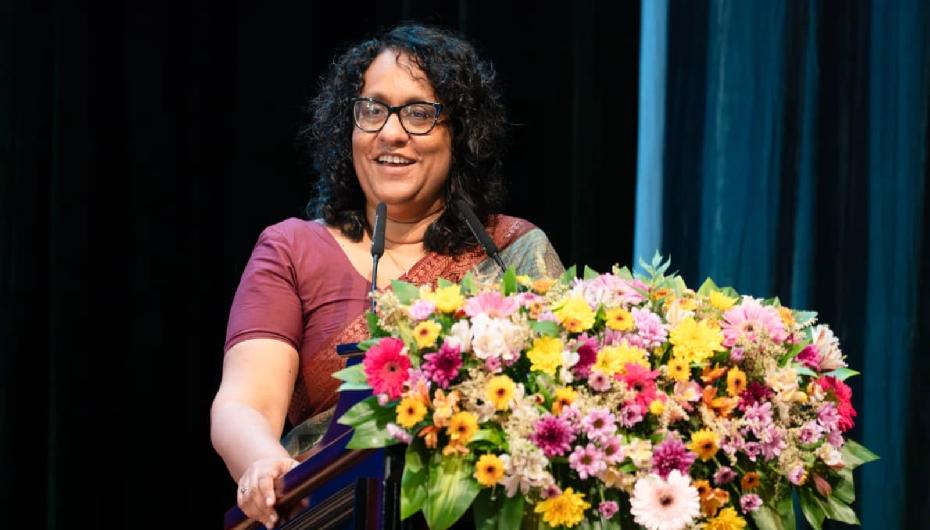
Development Projects Should Be Carried Out in Line with the Practical Needs of the People - Prime Minister Dr. Harini Amarasuriya

Prime Minister Dr. Harini Amarasuriya instructed officials to implement development projects by taking into account the practical needs of the people.

The Prime Minister made these remarks at the Colombo District Planning Committee meeting held today (12) at the Colombo District Secretariat to review the progress of development projects in the Colombo District.

During the meeting, discussions focused on a number of development projects scheduled to be implemented in 2026 and 2027, with special attention given to rural road development, alleviation of poverty, and infrastructure development.

Under the Decentralized Budget Programme, more than Rs. 195 million has been allocated for 2026, and Members of Parliament representing the district have submitted their proposals accordingly. To date, 240 project proposals have been received through Divisional Secretaries, and approval has already been granted for 126 projects valued at Rs. 127 million.

An allocation of Rs. 100 million has been made to ensure the safety of the roads in the Colombo District, with priority given to installing safety barriers and traffic signboards in hazardous locations. In addition, officials stated that plans have been prepared targeting 2027 to construct rural bridges with an allocation of Rs. 100 million and to develop 50 kilometres of roads.

A sum of Rs. 1,036 million has been allocated for the “Praja Shakthi” programme aimed at alleviation of poverty, and the Prime Minister instructed officials to complete all related projects by 30 November 2026. Further, discussions were also held regarding the development of school playgrounds with the support of the Ministry of Sports, as well as the implementation of special projects under the Ministry of Buddhasasana and Environment.

The meeting was attended by the Minister of Justice Harshana Nanayakkara, Deputy Speaker Dr. Rizvie Salih, Colombo District Coordinating Committee Chair and Member of Parliament Lakshman Nipuna Arachchi, Members of Parliament Samanmalee Gunasinghe and Asitha Niroshana, Colombo District Secretary Ginige Prasanna Janaka Kumara, along with public representatives and government officials representing the Colombo District.

Prime Minister’s Media Division

“Sri Lanka must shape the future of AI through policy, ethics, and inclusive governance, not simply adapt to it.” - Prime Minister Dr Harini Amarasuriya

Prime Minister Dr Harini Amarasuriya emphasised that Sri Lanka must shape the future of artificial intelligence through policy, ethics, and inclusive governance, rather than simply adapt to it. She made these remarks while attending as the Chief Guest at the launch of the AI Policy Framework for State Universities, held on May 8, 2026, at the Senate Hall, University of Colombo.

The initiative, led by the University Grants Commission in partnership with the U.S. Embassy in Sri Lanka, focuses on developing a policy framework to guide the responsible, ethical, and inclusive use of artificial intelligence within Sri Lanka’s state university system.

The event brought together academic leaders, policymakers, and AI specialists to present the framework and outline its implementation. The programme included a welcome address by UGC Chairman Senior Professor Kapila Seneviratne, followed by presentations on the policy framework and its key highlights by a panel of AI experts. The Vice Chairman of the UGC, Professor K. L. Wasantha Kumara, presented the proposed implementation plans.

Addressing the gathering, the Prime Minister noted that the rapid pace of technological change, particularly in artificial intelligence, presents both opportunity and risk. “We are dealing with a technology that is evolving faster than our ability to fully understand it, and that makes it essential to have strong systems of policy, governance, and implementation in place,” the Prime Minister stated.

The Prime Minister further observed that the impact of AI on higher education is particularly profound, as universities are spaces where knowledge is produced, shared, and challenged. She stressed that the framework must take into account discipline-specific implications, noting that fields such as the social sciences and humanities face unique challenges in the context of AI-driven change.

Highlighting broader policy considerations, the Prime Minister underscored the importance of ensuring that AI does not deepen existing inequalities within the education system. She noted that the framework should actively seek to bridge gaps and create more inclusive learning environments, including through the use of technology to support students with disabilities and address language barriers.

The Prime Minister also emphasised the need for a consultative approach in implementing the framework, encouraging continued engagement with academics and students. She noted that meaningful adoption would depend on inclusive dialogue and responsiveness to the concerns of the academic community.

In her remarks, the Prime Minister also drew attention to the need for strengthening research capacity and ensuring that Sri Lanka remains proactive rather than reactive in responding to global technological shifts. She highlighted that building local expertise and staying ahead of emerging trends would be critical to effectively harnessing the benefits of artificial intelligence.

The launch of the AI Policy Framework reflects a growing recognition of the need for a structured and forward-looking approach to artificial intelligence in Sri Lanka’s higher education sector, with a focus on balancing innovation with responsibility, equity, and long-term societal impact.

Prime Minister’s Media Division

Successful Digital Education depends on strong infrastructure, quality content, and Teacher Training — Prime Minister Dr. Harini Amarasuriya

Prime Minister Dr. Harini Amarasuriya emphasized that alongside developing the necessary infrastructure for the digitalization of Sri Lanka’s education system, it is equally essential to develop quality educational content and provide proper training for teachers.

The Prime Minister made these remarks during a discussion held at the Prime Minister’s Office on May 08 with representatives of Rotary International and a group of professionals from Sri Lanka’s software industry, facilitated by the Digital Task Force.

The Prime Minister pointed out that smart classrooms should not be limited to merely displaying YouTube videos, but must instead focus on creating high-quality digital educational content aligned with the national curriculum. She further stressed the importance of delivering all educational materials through an official government platform such as “e-Thaksalawa,” rather than through various private platforms, ensuring consistency and quality standards.

Prime Minister Dr. Amarasuriya also highlighted the need to implement digital training programmes centered around the 20 National Colleges of Education responsible for teacher training. She noted that familiarizing approximately 6,000 trainee teachers annually with digital technology could bring about a qualitative transformation within the school system.

During the discussion, it was revealed that steps are being taken to establish smart classrooms in 100 selected schools. Under the first phase, facilities will be provided to 50 schools, while the remaining 50 schools will receive the facilities in a later phase. Representatives of Rotary International stated that they are prepared to provide digital learning platforms to the Government free of charge and support the creation of educational content using modern technologies such as Artificial Intelligence (AI).

Attention was also drawn to the importance of establishing a formal agreement-based mechanism between the Government and the private sector to ensure the long-term sustainability of these projects. Both parties held discussions on managing practical challenges such as electricity costs and internet connectivity expenses in schools while implementing the process in a systematic manner.

The Prime Minister further stated that a five-year plan for the digital transformation of the education system will be finalized in the near future and requested Rotary representatives to contribute in line with the priorities identified within the plan.

The discussion was attended by the Secretary to the Prime Minister, Mr. Pradeep Saputhanthri, Additional Secretary to the Prime Minister A.B.M. Ashraf, officials from the Ministries of Education, Higher Education and Vocational Education, representatives of the Digital Task Force, and officials from Creative Software and Cambio Software Engineering.

Prime Minister’s Media Division

Vietnamese President Addresses Parliament During His Official Two-Day Visit to Sri Lanka

The President of the Socialist Republic of Vietnam and General Secretary of the Central Committee of the Communist Party of Vietnam, H.E. Tô Lâm, who arrived in Sri Lanka last night (07) on a two-day official visit, was received at the Bandaranaike International Airport by Prime Minister Dr. Harini Amarasuriya along with Ministers and Members of Parliament.

Following the arrival, an official welcoming ceremony was held this morning (08) at the Presidential Secretariat under the patronage of President Anura Kumara Dissanayake. Following the discussion several Memoranda of Understanding (MoUs) were also signed between the two countries.

Subsequently, President H.E. Tô Lâm arrived at the Parliament of Sri Lanka to address Parliament. He was received by Speaker Dr. Jagath Wickramaratne. This marked the first occasion in 11 years that a foreign Head of State addressed the Parliament of Sri Lanka.

Addressing Parliament, President Tô Lâm stated that although Vietnam and Sri Lanka are geographically distant, the two nations are closely connected through their shared histories, cultures, and aspirations for development. He noted that both nations possess long-standing traditions and rich identities rooted in compassion, tolerance, and coexistence, while Buddhism and Eastern cultural values have nurtured peace, humanity, and community spirit in both societies.

The President emphasized the diplomatic relations between Vietnam and Sri Lanka that flourished for more than half a century since 21 July 1970, recalling mark of the 55th anniversary of diplomatic relations between the two countries last year. He also recalled President Anura Kumara Dissanayake’s visit to Vietnam and participation in the International Vesak Day celebrations held in Ho Chi Minh City.

President Tô Lâm further stated,

The relationship between the two nations is built not only on diplomatic ties but also on mutual understanding, trust, and solidarity between the peoples of both countries.

I would like to recall the development journey of Vietnam, particularly the “Doi Moi” reforms initiated nearly four decades ago.

Forty years ago, when Vietnam launched ’Doi Moi’ (Renewal) in 1986, the country was facing numerous hardships. Vietnam had suffered from war, due to that infrastructure being destroyed, the economy was significantly declined, and the people were living in severe poverty. It was under such circumstances that Vietnam chose the path of ’Doi Moi’.

’Doi Moi’ fundamentally represented a new way of thinking. We realized that in order to develop our country, we had to face reality, assess existing conditions honestly, and reform institutions.

From a centrally planned economy, Vietnam gradually developed a socialist-oriented market economy. While the Government continued to guide the path, competitiveness, innovation, and international integration were encouraged.

In the agricultural sector, Vietnam empowered farmers and ensured food security, transforming itself from a food-deficient nation into one of the world’s leading agricultural exporters. In industry and services, the country opened its doors to investment and integrated into global value chains.

Today, Vietnam ranks among the world’s 32 largest economies. In 2025, our Gross Domestic Product (GDP) reached USD 514 billion, while per capita income exceeded USD 5,000. Vietnam is also among the world’s top 15 trading economies and is a member of more than 20 free trade agreements.

It is essential to strengthen internal capacities while integrating with the rest of the world. At the same time, development requires a stable, transparent, and fair legal foundation. Parliament plays a decisive role in this regard. Development is not merely about GDP growth; it is about providing people with better living standards, education, and employment opportunities. Food security and rural development are also essential for stability.

I am pleased to announce that Vietnam and Sri Lanka have agreed to elevate bilateral relations to a ’Comprehensive Partnership’. This will mark a new chapter of cooperation between the two countries.

Under this framework, we propose strengthening political and parliamentary cooperation; expanding economic, trade, and investment cooperation, including increasing bilateral trade to USD 1 billion; accelerating cooperation in agriculture, food security, and rural development; developing emerging sectors such as digital transformation, artificial intelligence, and green growth; promoting educational, cultural, tourism, and people-to-people exchanges, especially Buddhist and heritage tourism; and enhancing close collaboration at regional and international forums.

President Tô Lâm also requested the continued attention and support of the Government and people of Sri Lanka towards the Vietnamese community residing in Sri Lanka.

Addressing Parliament, Prime Minister Dr. Harini Amarasuriya stated:

We express our sincere appreciation to Your Excellency for undertaking this State Visit upon accepting the invitation extended in celebration of the 55th anniversary of diplomatic relations between Sri Lanka and Vietnam.

This visit is particularly significant as it marks your first overseas visit within the region following your reappointment as President and General Secretary of the Central Committee of the Communist Party of Vietnam. Although diplomatic relations between Vietnam and Sri Lanka span more than five decades, our relationship dates back to centuries. Sri Lankan Buddhist monks, traders, and travelers established connections with Vietnam and countries across East Asia. These early interactions laid the foundation for our long-standing historical ties. Over time, this relationship has flourished based on mutual trust and respect.

During difficult periods, the two countries have stood together in solidarity. Sri Lanka established diplomatic relations with Vietnam amidst considerable external pressures, and in return, Vietnam has continuously extended support to Sri Lanka in international forums. The close exchanges between the two countries clearly reflect the strength of our cooperation. Over the past few decades, Vietnam has achieved remarkable progress and emerged as one of the most dynamic and resilient economies in our region. This visit serves as an inspiration to countries, including Sri Lanka, that are striving towards sustainable and inclusive economic growth. We are committed on digital transformation, high-quality growth, and green development. Vietnam has invested significantly in capital, human resource development, and green growth, which closely aligns with our own development journey. Your experiences in transforming Vietnam from an agricultural economy into a modern economy are truly commendable.

The occasion was attended by all Ministers, Members of Parliament, Ambassadors, and several distinguished guests.

Prime Minister’s Media Division
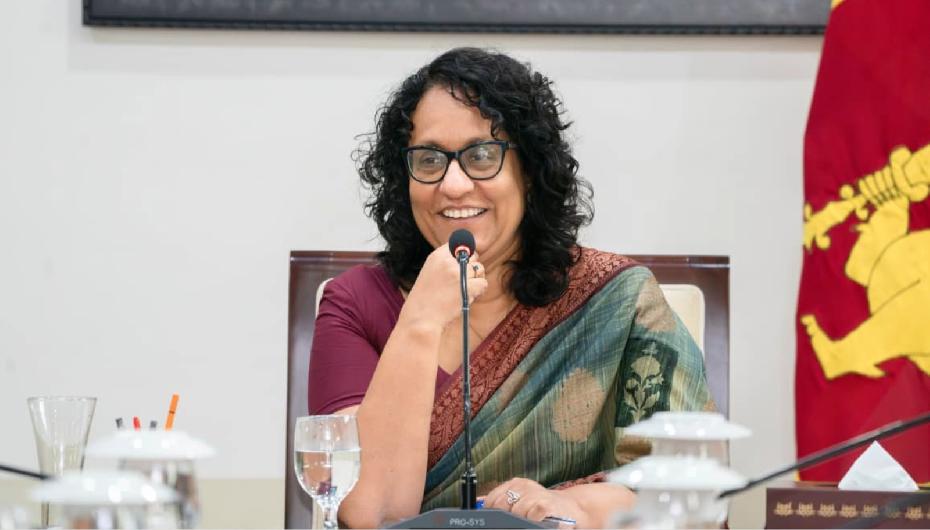
Comprehensive reforms to be introduced in the higher education sector in line with primary and secondary education reforms - Prime Minister Dr. Harini Amarasuriya

Prime Minister Dr. Harini Amarasuriya stated in Parliament on the 06th of May that the Government has planned to introduce relevant changes in the higher education sector in alignment with the new reforms being implemented in the primary and secondary education sectors.

The Prime Minister made these remarks while responding to questions raised by Member of Parliament Manjula Sugath Rathnayaka.

The Prime Minister further stated:

A special expert committee appointed for this purpose has been in operation over the past six months, and based on the report of this panel, existing issues in the higher education sector will be identified and the necessary reforms will be implemented.

A total number of 281,810 students sat for the 2025 G.C.E. Advanced Level Examination, of whom 176,538 qualified for university admission. Following the subject streams, the number of qualified students is as follows: 32,935 in Biological Sciences, 23,012 in Physical Sciences, 39,608 in Commerce, 58,269 in Arts, 4,199 in the General Stream, 12,472 in Engineering Technology, and 6,043 in Bio-Systems Technology and 42,937 students are expected to be admitted to universities.

While ensuring the quality of education, the Government gives priority to improving facilities for university students. It has also been decided to maintain the intake for first-degree admissions at the same level as in previous years.

A new course in Geographic Information Systems has been introduced at the University of Ruhuna, and a course in Electronic and Intelligent Systems Engineering has been introduced at the University of Peradeniya from the academic year 2025/2026. Fifty students will be enrolled for each of these new programmes. Steps have already been completed to release the cut-off marks and forward the registration lists to the respective universities.

Responding to a question raised by the Member of Parliament K. Kader Mastan regarding preschool education, the Prime Minister stated:

As most preschools in the country are managed by the private sector, the Ministry currently has no provision to offer permanent appointments or salaries to their staff. However, steps are already being taken to provide a certain allowance to volunteer teachers in selected preschools under Provincial Councils.

By 2027, the entire preschool education system is expected to undergo comprehensive reform, with necessary measures being jointly undertaken by the Ministry of Education and the Ministry of Women and Child Affairs.

In addition, based on the recommendations of the National Education Commission, a national policy to regulate preschool education is scheduled to be established in 2026. Under this policy, teacher guidelines and model activity manuals are being prepared, along with plans to conduct teacher training programmes at the provincial level.

Commenting on volunteer teachers, the Prime Minister emphasized that, in accordance with the Cabinet decision dated 04.01.2007, the policy of not recruiting any volunteer teachers beyond the approved 4,700 teacher aides will continue to be implemented.

Prime Minister’s Media Division